
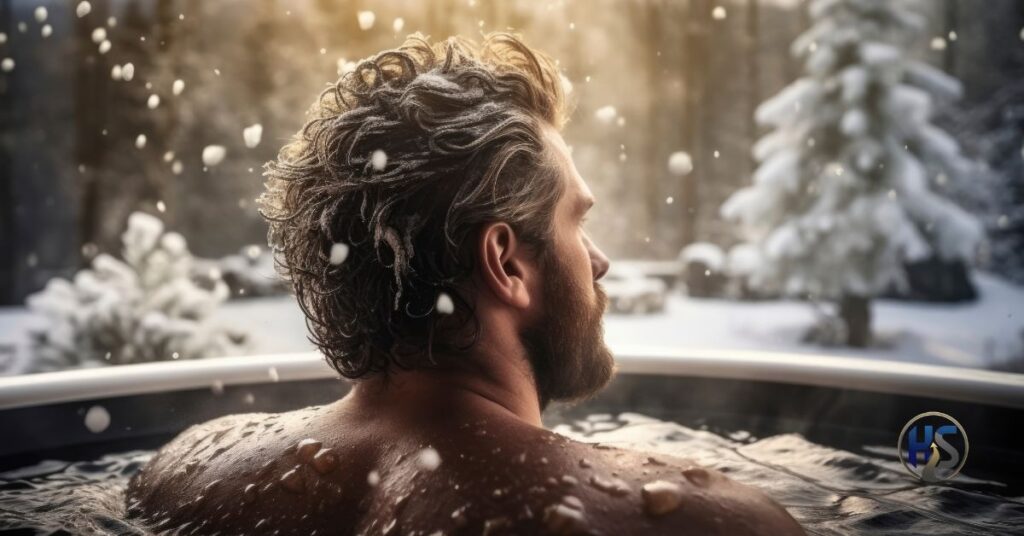

Cold water has a way of cutting through the noise. It is one of the few things that demands your full attention the moment you are in it. You cannot be distracted, half-present, or going through the motions. You are either breathing and staying calm, or you are getting out. There is no middle ground.
That binary is part of what makes a daily practice with an ice tub so interesting from a mental strength perspective. You are not just doing something for your body. You are repeating a small act of discipline that has a way of building on itself.
The Mental Side of Cold Exposure
Most of the conversation around cold plunging focuses on physical recovery and inflammation. That is well-documented and worth taking seriously. But the mental effects are just as real and perhaps more interesting for people who are not primarily focused on athletic recovery.
Regular cold exposure trains a specific kind of emotional regulation. The body panics. You do not. That gap between stimulus and response is exactly what you are practicing every time you get into an ice tub and stay calm rather than scrambling out.
Over time, people who maintain this habit often describe:
- A greater sense of control over stress responses in everyday situations
- More stable energy and mood throughout the day
- A cleaner start to the morning: alert and composed rather than sluggish
- Confidence that comes from repeatedly choosing something difficult on purpose
None of this requires an extreme cold temperature or a long session. Consistency over time is what produces these effects, not single dramatic plunges.
Why Home Ownership Makes This Habit Last
The mental resilience angle only works if the habit is consistent. A weekly session at a wellness studio does not build the same kind of repeated conditioning as a daily or near-daily practice. The routine needs to be close enough to become automatic.
This is the main argument for owning a quality ice tub at home. When the tub is available and ready, the decision to plunge becomes a small one. When it requires travel, booking, or significant setup, it becomes a big one, and big decisions get skipped more often.
What Actually Matters When Choosing an Ice Tub
People new to cold plunging often focus on price and size. Both matter, but neither is the most important factor for long-term satisfaction. The thing that determines whether a home ice tub is genuinely useful or becomes an expensive inconvenience is how well it holds temperature.
An ice tub that loses heat quickly puts the burden on the chiller. The chiller runs more, uses more electricity, creates more noise, and wears out faster. In warm months, a poorly insulated tub may never actually reach the target temperature, even with the chiller running constantly. This is a real-world problem that owners of cheap tubs discover after a few weeks, not something that shows up in the product listing.
Theralpine builds their tubs around advanced insulation technology that keeps water cold up to 16 times longer than standard alternatives. Their system reduces energy usage by up to 14.6 times compared to poorly insulated tubs, which means a dramatically lower electricity bill and a chiller that operates far less frequently. A stronger chiller paired with their insulation runs even less. A more modest chiller delivers results that would typically require a much more powerful unit.
The practical design is also worth noting. The tubs have a compact footprint suitable for balconies and home spaces, ground-level entry, anti-slip flooring, and they work in both indoor and outdoor environments. For users up to 2 meters tall, there is enough room to submerge properly. These details matter when you are making a decision for daily use over months and years.
The Seasonal Reality of Running a Cold Plunge at Home
Something most product listings do not address is how an ice tub performs when the weather warms up. In autumn and winter, cold exposure is easy to achieve. The real test comes in spring and summer, when ambient temperatures rise and the system has to work against warmer surroundings.
A poorly insulated tub is constantly absorbing heat from the air around it. Even with a chiller running, the water temperature drifts upward between sessions. As outdoor temperatures climb toward summer, entry-level systems often hit their ceiling and cannot maintain target temperatures despite running non-stop. More noise, higher bills, and water that never quite gets where you need it.
With proper insulation, this problem largely disappears. The water stays cold because heat entry is minimal. The chiller cycles on occasionally rather than running constantly. The system is quiet, efficient, and ready whether it is October or July.
Building Something That Lasts
The appeal of cold plunging is not complicated. It is a daily practice that takes ten to fifteen minutes, costs very little to run when done right, and pays dividends in physical recovery, mental clarity, and genuine resilience over time.
The challenge is staying consistent long enough to feel those payoffs. A good day one is easy. Day forty, when you are tired and the water feels colder than usual and you have a hundred other things to do, is where the habit either holds or breaks.
Equipment that works quietly in the background makes a real difference to that equation. Not because willpower does not matter, but because the practice should not be a fight on two fronts. The mental challenge of getting in is enough. The product should handle everything else.
Choose well, and the practice tends to stick.
Also Read: Mental Health for Professionals: Burnout & Recovery Guide (2026).



Pingback: Charleston’s Go-To Choice for Residential & Commercial Boat Lifts