

Anxiety is a silent issue facing hospitals and clinics nationwide.
Patients arrive already feeling stressed, nervous, and overwhelmed about their impending healthcare experience. The environment created as soon as they walk in the door can either heighten or calm those feelings.
But did you know that an estimated 31.1% of adults will suffer from an anxiety disorder at some point in their lives?
That means almost one in three patients entering a medical facility has anxiety.
The good news is healthcare professionals can reduce patient anxiety simply by investing in the right medical facility furniture and focusing on calming design elements.
Below, this article walks through everything needed about how healthcare facilities cause patient anxiety (and how to avoid those issues with smart design choices).
You’ll learn:
- Why Healthcare Environments Cause Anxiety
- How Medical Facility Furniture Can Help Patients Relax
- Design Elements That Promote Calm & Reduce Stress
- Creating A Calming Waiting Room
- Easy Changes That Can Make A Big Difference
Why Healthcare Environments Cause Anxiety
Wait…hang on.
Isn’t the hospital supposed to be a calming place? It’s where people go when they need professional help to heal themselves or their families. Somehow that doesn’t always match up with what patients actually feel when they visit the doctor.
Healthcare environments cause anxiety for a variety of reasons. Whether it’s nerves about hearing test results, worrying about a sick loved one or simply the stress of sitting in a clinic all day…something about these facilities intimidates patients.
Elements of the clinical environment like harsh fluorescent lights, sterile white walls, and cold hard surfaces can actually make anxiety worse.
Studies show the built environment has a direct impact on patient stress levels and even pain.
That doesn’t exactly instill confidence or help anxious patients feel comfortable in a healthcare setting.
Facility furniture and design elements have the power to trigger or calm patient anxiety. Choosing wisely can improve patient outcomes and boost recovery.
How Medical Facility Furniture Can Help Patients Relax
Believe it or not, the chairs provided for patients to sit in have a big impact on their anxiety.
Patients suffering from anxiety are hyper-focused on their surroundings. What does the furniture feel like? Are the seats comfortable? Is the armrest the right height? All of these details matter to anxious patients because they’re looking for reasons to worry.
Thoughtful medical facility furniture can help patients relax by:
- Reducing physical tension throughout their body
- Creating a feeling of safety and comfort
- Promoting relaxation while they wait
Well-made furniture creates a sense of calm in a clinical environment. When it comes to choosing hospital chairs, healthcare providers should prioritize comfortable padding, ergonomic support, and warm materials.
Patients shouldn’t feel like they’re sitting in a hospital when they’re sitting in a waiting room.
Choose chairs that:
- Are well-padded. Soft cushioning helps reduce physical and mental tension.
- Feel supportive. Injured or anxious patients shouldn’t feel like chairs are “digging into their skin.”
- They are warm and inviting. Plastic furniture is cold and hospital-like. Humans naturally seek textures that are warm and soft to the touch.
Outdated seating is one of the easiest fixes for calming a clinical environment. If the furniture is uncomfortable and hospital-like, try upgrading to something more comfortable.
Design Elements That Promote Calm & Reduce Stress
Medical facility furniture is just one element of a clinical space that can affect patient anxiety.
Let’s take a look at a few other design elements that can calm patients.
Natural Lighting
Natural lighting speeds up recovery time and helps patients feel more relaxed. Large windows, skylights, and indoor plants help create a calming, natural environment for patients to enjoy.
Incorporating elements of nature into a healthcare environment has been shown to reduce patient anxiety and improve outcomes.
Noise
The beeping of machines, loud conversations from hospital staff, and annoying alarm systems are just a few sources of noise in hospitals that drive up patient anxiety. One 2025 study even found hospital environments that focused on noise reduction saw positive results in patient satisfaction and improved recovery time.
Healthcare providers can take steps to reduce noise by using sound-absorbing materials and creating quiet spaces for patients to relax.
Wayfinding & Signage
Getting lost is one of the worst feelings. Unfortunately, it happens to many patients every day. Large buildings with confusing corridors can cause anxiety to spike in patients.
Use clear signage, color-coded zones, and intuitive layouts to help patients feel confident navigating the facility.
Creating A Calming Waiting Room
Patients spend a lot of time sitting in waiting rooms.
When someone comes to a medical facility, they’re sitting in the waiting room to wait. Waiting increases anxiety.
And when patients are forced to sit and do nothing but worry in the waiting room, it’s the healthcare provider’s job to make them feel as comfortable as possible.
Here are a few tips for creating a calming waiting room.
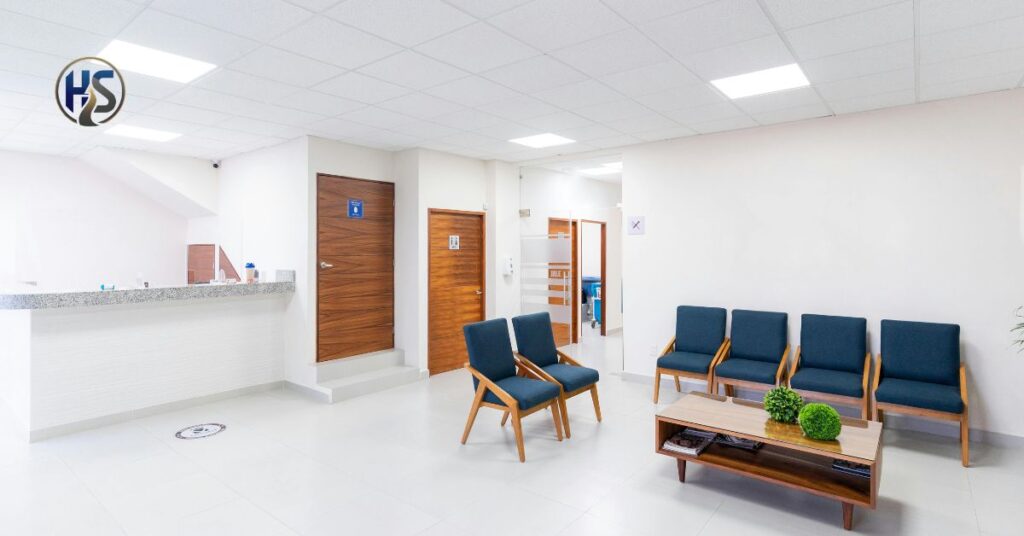
- Comfortable seating. Comfortable chairs are important, but what else should providers look for? Soft, supportive cushions; armrests that aren’t too hard; and chairs that aren’t draped in cheap paper.
- Warm colors. Stay away from pure white walls and grey floors. Warm tones help a facility feel cozy and inviting.
- Natural elements. Nature can help calm patients too! Consider adding plants, water features, or nature-inspired artwork to the waiting room.
- Privacy options. Patients shouldn’t feel exposed when they sit and wait for their appointment. Provide enough seating so patients aren’t forced to sit beside strangers.
Notice how grouped furniture works better? Rows of chairs facing each other can be stressful and uncomfortable. Patients appreciate having personal space and zones that they can claim as their own, even in a waiting room.
Small changes to a waiting room can make a big impact on how anxious patients feel when they visit a practice.
Easy Changes That Can Make A Big Difference
There’s no need to rip out all of a facility’s fixtures and start from scratch to help patients relax.
Earlier this year, the APA released a poll that showed two-thirds of Americans say they’re anxious about current events. Patients are living in a world that causes stress and anxiety. A patient’s anxiety doesn’t simply disappear when they walk into a clinic.
Here are a few simple changes that can make a facility more calming:
- Replace overhead lighting with softer alternatives.
- Add cushioned seating throughout the facility.
- Hang calming art or nature photos on the walls.
- Use warm materials for flooring and surfaces.
- Ensure the facility has reliable temperature control.
A calming healthcare environment starts with small choices that add up.
Pulling It All Together
Healthcare environments cause anxiety. But that doesn’t have to be the case for any practice.
Anyone running a hospital or clinic has a responsibility to make sure patients aren’t more stressed when they leave the facility than when they came in.
Start small and work towards creating the most relaxing environment for your patients.
Add comfortable furniture and increase relaxation by the following:
- Providing patients with comfortable furniture
- Choosing furniture with warm materials
- Focusing on calming design elements like natural light and plants
- Creating a calming waiting room
- Making small improvements that add up
Healthcare providers have the power to reduce patient anxiety. Starting today!