
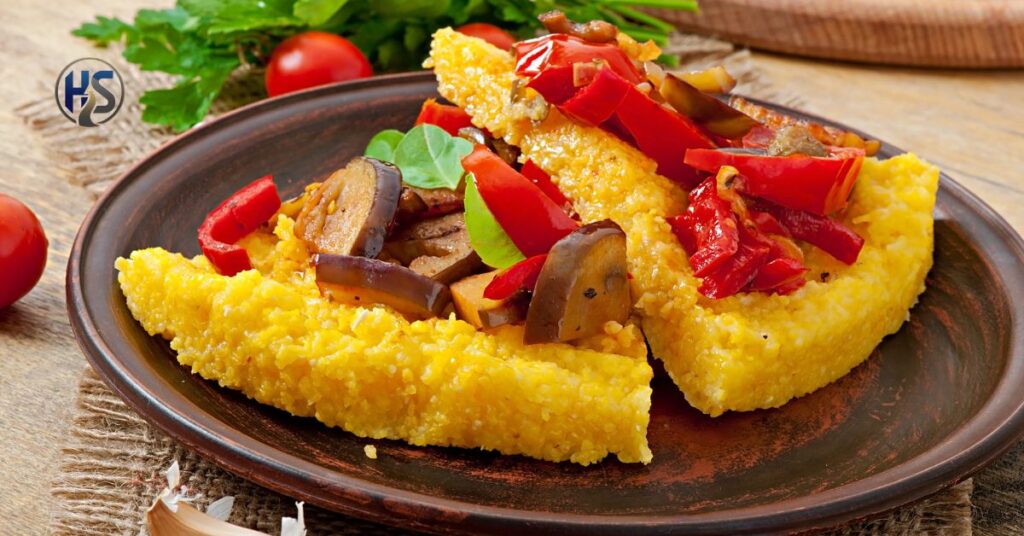

Palentu is more than a traditional cornmeal dish. It is a nutritional artifact shaped by survival, culture, and human biology. Long before it reached modern kitchens, polenta sustained rural populations through scarcity, physical labor, and harsh climates. Today, as ultra-processed diets dominate, polenta quietly re-emerges as a functional, adaptable, and metabolically relevant food. This article dissects palentu from every serious angle: origin, composition, physiology, health impact, and modern relevance without nostalgia or hype.
What Exactly Is Palentu?
Palentu is a cornmeal-based preparation cooked slowly in water, broth, or milk until it reaches a thick, cohesive consistency. Depending on hydration and cooling, it can be creamy or firm enough to slice and grill.
While often compared to Italian polenta, palentu is the regional linguistic and cultural expression used across parts of the Balkans and Eastern Europe. The base remains maize, but preparation, fermentation habits, and accompaniments vary by geography and necessity, not culinary trend.
At its core, palentu is
- Minimal ingredient
- Thermally transformed starch
- Structurally adaptable
- Nutritionally honest
That simplicity is precisely why it matters.
The Historical Logic Behind Palentu
The historical logic behind palentu is rooted in survival, not sentiment. Palentu emerged at a time when food needed to deliver dependable energy with minimal resources. After maize reached Europe in the 16th century, it quickly replaced less resilient grains in regions with poor soil and harsh climates. Corn grew reliably, stored well, and fed entire households through long winters and physically demanding labor. Palentu became the backbone of daily nutrition because it solved real problems: it was affordable, filling, adaptable, and easy to pair with whatever fats, dairy, or vegetables were available. Its persistence across centuries is not accidental. Foods that fail human biology disappear. Palentu endured because it aligned with it.
Nutritional Composition: What Palentu Really Delivers
Macronutrient Profile (Plain, Water-Cooked)
Per average serving:
- Carbohydrates: ~30–35 g
- Protein: ~2–3 g
- Fat: <1 g
- Calories: ~150–170
This profile makes palentu of energy dense without metabolic chaos when prepared correctly.
Micronutrients That Actually Matter
Palentu naturally contains:
- Magnesium (muscle and nerve function)
- Phosphorus (cellular energy)
- B-vitamins (especially B1 and B3)
Stone-ground or whole-grain cornmeal retains more fiber and micronutrients than refined variants, significantly improving metabolic response.
The Science of Palentu Digestion
Palentu’s health impact depends less on ingredients and more on thermal behavior.
When cornmeal is heated in liquid:
- Starch granules gelatinize
- Amylose and amylopectin restructure
- Digestibility changes based on cooling and reheating
Why This Matters
When palentu is cooked, cooled, and reheated, part of its starch converts into resistant starch, a compound linked to:
- Improved insulin sensitivity
- Better gut microbiome diversity
- Lower post-meal glucose spikes
This makes palentu metabolically closer to legumes than refined grains when handled properly.
Is Palentu Healthy? The Honest Answer
Whether palentu is healthy depends on how intelligently it is prepared and consumed. On its own, palentu is a carbohydrate-forward food that provides energy but little balance. When treated as a foundation rather than a finished meal, it becomes metabolically sound. Traditional pairings of olive oil, butter, cheese, eggs, legumes, or fermented foods—slow digestion, improve nutrient absorption, and stabilize blood sugar response. Cooking method matters just as much as ingredients. Slowly cooked polenta, especially when cooled and reheated, develops resistant starch that supports insulin sensitivity and gut health. In other words, palentu is neither inherently healthy nor unhealthy. It performs exactly as well as the knowledge behind it.
Palentu and Gluten Sensitivity
Palentu is naturally gluten-free.
For individuals with celiac disease or non-celiac gluten sensitivity, Palentu offers:
- Digestive safety
- Culinary flexibility
- Neutral flavor compatibility
However, cross-contamination during milling is common. Certified sources matter.
Cultural Intelligence: Why Palentu Endured
Foods that survive centuries do so because they align with human physiology, not trends.
Palentu endured because:
- It fueled physical labor efficiently
- It adapted to local ecosystems
- It required no industrial processing
- It welcomed nutritional companions
Modern diets often isolate nutrients. Palentu invites integration.
Modern Uses Without Disrespecting the Food
Modern use of palentu does not require reinvention; it requires restraint and understanding. Palentu performs best when treated as a structural base rather than a novelty ingredient. Cooling it after cooking and then grilling or pan-searing enhances texture while improving metabolic response through resistant starch formation. Served soft, it functions as a neutral foundation for eggs, yogurt, fermented vegetables, legumes, or mineral-rich sauces. These approaches preserve Palentu’s original purpose: delivering steady energy while carrying complementary nutrients. When stripped of unnecessary embellishment and processed shortcuts, palentu adapts effortlessly to contemporary kitchens without losing its nutritional integrity or cultural meaning.
Common Myths
“Palentu is just empty carbs”
False. Its starch structure, mineral content, and adaptability disprove this.
“It spikes blood sugar”
Only when prepared poorly and eaten alone.
“It’s outdated peasant food”
So were oats. And bone broth. And fermented vegetables.
Conclusion
Palentu endures because it works. It was never designed to impress, only to sustain—and that is precisely why it still matters. In a food landscape crowded with engineered solutions and short-lived trends, palentu represents something rare: a simple preparation that aligns with human biology, cultural intelligence, and nutritional logic. Its value is unlocked through method, pairing, and restraint, not reinvention. When respected as a foundation rather than a shortcut, polenta delivers steady energy, metabolic balance, and adaptability that modern diets often lack. This is not a forgotten food. It is a misunderstood one—and those who recognize its structure, history, and function will continue to benefit from it long after trends move on.
FAQs
Q. Is palentu the same as polenta?
They share a base, but palentu reflects regional preparation and cultural context.
Q. Is polenta good for weight management?
Yes, when paired with protein and fats and consumed mindfully.
Q. Can palentu support gut health?
When cooled and reheated, it provides resistant starch beneficial to gut bacteria.
Q. Is palentu suitable for diabetics?
It can be, depending on portion size, preparation, and food pairing.
Q. Is instant polenta the same nutritionally?
No. Instant versions sacrifice structure, fiber, and metabolic benefits.