
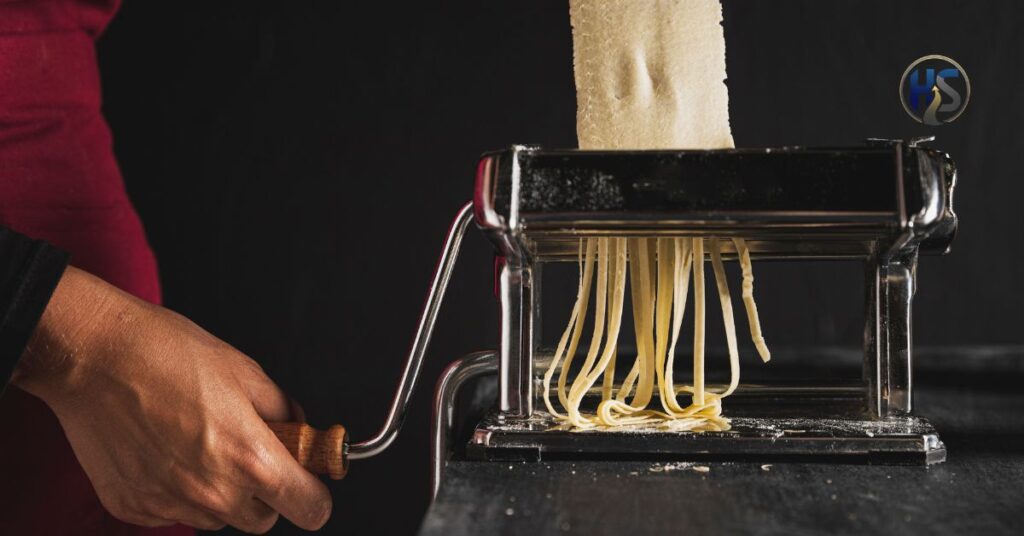

In modern pasta manufacturing, precision is not optional; it is competitive leverage. The tortellinatrice is a specialized machine designed to produce tortellini quickly, with structural accuracy and consistent filling control. Rooted in Italy’s culinary heritage, especially in Emilia Romagna, this machine represents the evolution of handcrafted pasta into scalable production without sacrificing authenticity.
This guide delivers a deep, experience-backed, technically informed breakdown of how a tortellinatrice works, who needs it, how to evaluate it, and why it has become indispensable in fresh pasta production.
What Is a Tortellinatrice, and Why Does It Matter?
A tortellinatrice is an engineered pasta-forming machine built specifically to create tortellini, the ring-shaped stuffed pasta traditionally associated with cities like Bologna. Unlike general ravioli machines, it is calibrated to replicate the intricate folding and sealing method required for true tortellini.
Its importance lies in three operational pillars: consistency, scalability, and efficiency. Where a skilled artisan may produce a few kilograms per hour, a tortellinatrice can multiply that output dramatically while maintaining uniform size, shape, and filling balance critical for cooking performance and consumer satisfaction.
The Mechanical Architecture Behind Precision
At its core, a tortellinatrice combines dough lamination, filling injection, shaping, folding, and sealing into a synchronized system. The dough is rolled to a calibrated thickness to ensure elasticity without tearing. A volumetric filling pump dispenses precise portions to avoid overfilling or leakage. Molds are then cut, folded, and sealed under controlled pressure.
The engineering challenge lies in replicating the tight fold that defines tortellini. Premium machines achieve this through adjustable forming modules that maintain structural integrity even at high speeds. This mechanical precision directly impacts cooking stability and shelf life.
Production Capacity and Operational Output
Production output varies significantly depending on machine class. Entry-level commercial units may produce 15–25 kg per hour, while mid-range systems operate between 50–100 kg per hour. Industrial-scale tortellinatrici can exceed 150 kg per hour under optimized conditions.
However, raw output is only part of the equation. Seal integrity rate, filling variance percentage, and downtime ratio are equally important metrics. High-quality machines maintain less than 2–3% defective sealing rates, minimizing product waste and preserving brand consistency in packaged fresh pasta distribution.
Types of Tortellinatrice Machines and Their Applications
Manual and compact models are typically used in artisan pasta labs and boutique restaurants. These units reduce physical labor but still require close operator involvement. They are ideal for businesses focused on limited, premium batches.
Semi-automatic systems introduce mechanized filling and shaping with partial human supervision. They serve regional pasta suppliers who require moderate throughput without full industrial complexity.
Fully automatic industrial tortellinatrici operate as part of integrated production lines. Equipped with PLC controls and programmable recipes, they allow continuous production, mold interchangeability, and seamless connection to packaging and chilling systems. These are designed for manufacturers targeting large-scale distribution.
Hygiene Engineering and Food Safety Compliance
Stuffed pasta presents unique food safety challenges due to its moist, protein-rich fillings. For this reason, modern tortellinatrice machines are constructed using food-grade stainless steel, typically AISI 304 or 316. Surfaces are polished to eliminate bacterial retention points, and quick-release components allow efficient sanitation.
Compliance with HACCP protocols and European machinery directives ensures safe operation. Machines designed with minimal dead zones and easy-access cleaning panels reduce sanitation time while maintaining strict hygiene standards—critical for businesses handling fresh meat or dairy fillings.
Economic Impact and Return on Investment
From a business perspective, a tortellini maker is a capital asset that transforms production economics. Manual tortellini shaping is labor-intensive and highly dependent on skilled staff. Automation reduces reliance on manual craftsmanship while preserving quality
Labor savings, filling precision, and reduced waste contribute directly to margin expansion. Many medium-scale pasta producers recover investment within two years through increased output and operational stability. Restaurants expanding into packaged fresh pasta often experience revenue growth after implementing semi-automatic systems.
Technological Advancements in 2026 Models
Modern tortellinatrici have evolved beyond mechanical forming. Today’s high-end systems include touchscreen PLC panels, recipe memory storage, automated speed calibration, and predictive maintenance diagnostics.
Some manufacturers now integrate IoT-based monitoring systems that track production efficiency, temperature stability, and mechanical wear in real time. These innovations reduce unexpected downtime and optimize long-term maintenance planning, giving producers better operational forecasting capabilities.
Customization and Mold Flexibility
One overlooked advantage of advanced tortellinatrici is mold adaptability. Certain systems allow interchangeable dies, enabling the production of cappelletti or similar stuffed pasta formats. This flexibility allows manufacturers to diversify product lines without investing in entirely separate machinery.
Customization options also extend to dough thickness adjustment, filling density control, and portion calibration features that directly influence texture and flavor balance.
Sustainability and Energy Efficiency Considerations
Energy efficiency has become a strategic priority in food manufacturing. New-generation tortellinatrice systems use optimized motors and variable speed drives to reduce energy consumption per kilogram produced. Efficient dough lamination also decreases scrap waste.
Additionally, improved portion accuracy reduces filling waste, which not only lowers ingredient costs but also supports sustainable production practices—an increasingly important factor for distributors and retail partners.
Buying Strategy: How to Select the Right Tortellinatrice
Selecting the right machine requires alignment between production goals and operational capacity. Key evaluation criteria include daily output targets, filling type viscosity, sanitation time requirements, available space, and technical support accessibility.
Overinvesting in oversized industrial equipment can strain budgets unnecessarily, while underinvesting can limit scalability. Conducting throughput simulations and requesting seal integrity tests before purchase significantly reduces investment risk.
The Strategic Role of Tortellinatrice in Modern Pasta Manufacturing
The tortellinatrice represents the intersection of culinary tradition and industrial precision. It enables producers to preserve the cultural authenticity of tortellini while meeting modern demand for volume, safety, and uniformity.
As global interest in fresh stuffed pasta continues to rise, production systems that combine hygiene engineering, mechanical accuracy, and scalable automation will define market leaders. Businesses that adopt high-quality tortellinatrice technology position themselves not just for efficiency but for long-term competitive dominance.
Conclusion
The tortellinatrice is more than a pasta-forming machine; it is a strategic production system that transforms traditional tortellini craftsmanship into scalable, precision-driven output. By combining controlled dough lamination, accurate filling injection, and mechanically consistent folding, it ensures uniform quality, structural integrity, and operational efficiency. For restaurants, artisan labs, and industrial manufacturers, investing in the right tortellinatrice means lower labor dependency, improved hygiene standards, higher production capacity, and stronger long-term profitability. In a competitive fresh pasta market, precision and consistency are the true differentiators.
FAQs
Q. What is a tortellinatrice used for?
A tortellinatrice is used to automate the production of tortellini by rolling dough, injecting filling, folding, and sealing each piece with consistent accuracy.
Q. How much pasta can a tortellinatrice produce per hour?
Depending on the model, production ranges from 15–25 kg/hour for compact units to over 150 kg/hour for industrial machines.
Q. Is a tortellinatrice suitable for small restaurants?
Yes. Compact or semi-automatic models are ideal for restaurants and small pasta labs looking to increase efficiency without full industrial investment.
Q. Does it maintain an authentic tortellini shape?
High-quality machines are engineered to replicate the traditional fold associated with regions like Bologna, ensuring authenticity and structural stability.
Q. What materials are tortellinatrice machines made from?
Most professional machines are constructed using food-grade stainless steel (AISI 304 or 316) to meet hygiene and food safety standards.
Q. How long does it take to recover the investment?
Return on investment typically ranges between 18 and 30 months, depending on production scale, labor savings, and distribution volume.