
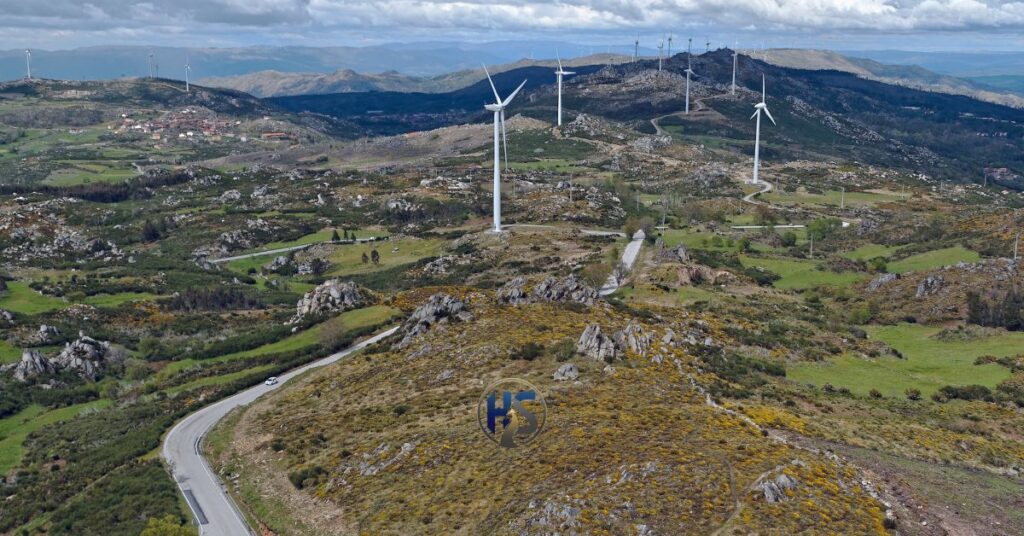

BodenXT is a long-range transformation platform launched by the municipality of Boden in northern Sweden. It is not a single factory, not a branding campaign, and not a short-term stimulus plan. It is a coordinated, multi-decade acceleration strategy designed to compress 20 years of industrial, social, and infrastructure growth into a single generation.
At its core, BodenXT aligns heavy industry, renewable energy, workforce expansion, housing development, digital infrastructure, and community planning into one synchronized framework. The objective is direct: build a globally competitive green industrial hub while simultaneously growing a livable, resilient city.
Why BodenXT Exists: The Green Re-Industrialization Moment
Northern Sweden is experiencing one of the largest waves of green industrial investment in Europe. Access to stable renewable electricity, land availability, cold climate advantages for energy efficiency, and proximity to European markets created a rare strategic window.
BodenXT emerged as a response to that window. Instead of reacting to industrial investment, the municipality decided to orchestrate it. This proactive coordination prevents housing shortages, labor gaps, grid overload, and chaotic urban sprawl — common failures seen in rapid industrial booms globally.
The philosophy is simple: industry grows only if society grows with it.
The Industrial Core: Green Steel and Hydrogen at Scale
The most visible anchor of BodenXT is the large-scale green steel and hydrogen initiative inside the 550-hectare Boden Industrial Park. The facility, developed by Stegra (formerly H2 Green Steel), represents a structural break from traditional blast-furnace steelmaking.
Key Production Metrics
- Annual production capacity: ~5 million tonnes of steel
- Carbon reduction potential: Up to 95% lower CO₂ emissions compared to conventional processes
- Projected direct jobs: ~2,000 by 2030
- Energy model: Hydrogen-based direct reduction using renewable electricity
Steel accounts for roughly 7–8% of global CO₂ emissions. By replacing coal with green hydrogen, this project shifts industrial decarbonization from theory to industrial reality.
This is not symbolic sustainability. It is a heavy industry, re-engineered.
Boden Industrial Park: Infrastructure Designed for Scale
Boden Industrial Park spans approximately 550 hectares, larger than many urban districts in Scandinavian capitals. Its scale allows for integrated logistics, hydrogen production, energy distribution, and rail access without fragmented development.
The railway connection to the industrial park was completed ahead of schedule and under budget, a rare achievement in European infrastructure delivery. That rail link reduces transport friction, strengthens export competitiveness, and anchors long-term industrial viability.
Above-ground and below-ground infrastructure planning occurred simultaneously. Utilities, fiber networks, transport corridors, and subsurface systems were engineered together, not retrofitted later. That integration reduces long-term costs and systemic risk.
Population Surge: A City That Is Growing Again
Industrial transformation without population growth fails. BodenXT addresses both.
Recent data indicate that hundreds of new residents have relocated to Boden directly due to industrial expansion. Forecasts that once predicted stagnation now show sustained growth.
This shift matters. Many European mid-sized municipalities face demographic decline. Boden, instead, is attracting engineers, construction workers, international specialists, logistics professionals, and entrepreneurs.
Population growth fuels:
- New schools and educational partnerships
- Expanded housing construction
- Retail and service sector expansion
- Increased tax base stability
The transformation extends beyond factories. It reshapes daily life.
BodenXT by the Numbers: Industrial Scale & Impact Snapshot
Below is a consolidated impact overview that clarifies scope, scale, and structural weight.
| Metric Category | BodenXT Data Point | Strategic Significance |
| Industrial Land Area | ~550 hectares | One of Europe’s largest planned green industrial zones |
| Steel Production Target | ~5 million tonnes annually | Industrial-scale decarbonization, not pilot production |
| Emissions Reduction | Up to 95% vs. conventional steel | Major climate impact per production unit |
| Direct Jobs (Projected) | ~2,000 by 2030 | Long-term labor market transformation |
| Energy Model | Renewable electricity + green hydrogen | Structural break from coal-based metallurgy |
| Infrastructure Integration | Rail, grid, digital, subsurface planning aligned | Reduced long-term systemic bottlenecks |
This table does more than summarize metrics. It demonstrates that BodenXT operates at full industrial scale not demonstration scale.
When industrial land size, hydrogen integration, emissions reduction, and workforce expansion converge in one coordinated plan, the result is not incremental progress. It is structural re-engineering.
Five Structural Pillars of BodenXT
BodenXT operates through five coordinated pillars:
Skills Supply
The municipality collaborates with vocational institutes, universities, and industry to secure future labor pipelines. Training programs align directly with hydrogen technology, green metallurgy, logistics, and advanced manufacturing.
Living & Housing
Rapid housing construction prevents bottlenecks that typically derail industrial booms. Zoning reforms and accelerated planning processes ensure supply keeps pace with job creation.
Business Development
Small and mid-sized enterprises integrate into the industrial ecosystem. Suppliers, service providers, and tech startups gain access to a growing industrial cluster.
Infrastructure Above Ground
Transport networks, grid capacity, and digital connectivity expand in lockstep with industrial timelines.
Infrastructure Below Ground
Subsurface planning ensures utilities, pipelines, and foundations support future expansion without costly reconstruction.
Each pillar functions independently but operates under one strategic umbrella. That coordination is the model’s strength.
Energy Advantage: The Renewable Backbone
Sweden’s northern grid provides access to large volumes of fossil-free electricity, primarily hydro and wind. For hydrogen-based steel production, stable renewable electricity is not optional it is foundational.
Boden’s geographic position reduces grid congestion risk and provides scalability potential. Cold climate conditions also enhance industrial energy efficiency by lowering cooling loads in heavy processes and data systems.
Energy availability is not a footnote. It is the economic catalyst.
Economic Multiplier Effects Beyond Steel
BodenXT does not stop at metallurgy. Secondary and tertiary economic layers are forming:
- Hydrogen innovation and storage solutions
- Advanced logistics optimization
- Digital industrial monitoring systems
- Smart agriculture pilots using AI-assisted greenhouse models
- Edge computing and 5G industrial networks
These adjacent ecosystems diversify risk. If steel drives phase one, digitalization and energy innovation secure phase two.
Risk Factors: What Could Challenge BodenXT
No large transformation escapes risk. BodenXT faces measurable structural challenges:
- Energy price volatility across Europe
- Global steel demand cycles
- Hydrogen infrastructure maturity timelines
- Workforce relocation barriers
- Supply chain disruption
However, early infrastructure investment and policy alignment reduce systemic fragility. By planning housing, energy, transport, and workforce simultaneously, BodenXT lowers the probability of bottleneck failure.
Global Significance: Why BodenXT Matters Beyond Sweden
The industrial world is under pressure to decarbonize. Many regions discuss transition. Few build it at scale.
BodenXT demonstrates a replicable template:
- Anchor transformation around renewable energy.
- Align municipal planning with industrial timelines.
- Build infrastructure before capacity strain appears.
- Secure workforce pipelines early.
- Integrate community growth with industrial policy.
If successful, Boden becomes a benchmark for industrial decarbonization strategies across Europe and North America.
The Long View: 2030 and Beyond
By 2030, the green steel facility aims for full production capacity. By then, Boden’s population structure, housing stock, and infrastructure profile will look dramatically different from pre-transition years.
But the real test is durability. Can the ecosystem remain competitive during economic downturns? Can supply chains localize enough to sustain growth?
BodenXT’s greatest strength lies in its integrated design. It does not depend on one facility alone. It builds a layered economic base that can adapt.
Conclusion
BodenXT is not hype. It is a structural change in motion. A municipality that once faced demographic stagnation now sits at the center of Europe’s green re-industrialization wave.
Heavy industry is decarbonizing. Infrastructure is expanding. The population is rising. Energy systems are modernizing.
If execution remains disciplined, BodenXT will stand as one of the most consequential municipal transformation models of the 21st century, proving that climate transition and economic expansion can move in the same direction.
FAQs
Q. What does BodenXT stand for?
BodenXT represents a long-term transformation initiative designed to accelerate industrial, economic, and societal growth in Boden, Sweden.
Q. How large is the Boden Industrial Park?
Approximately 550 hectares, making it one of Sweden’s largest green industrial development zones.
Q. How much steel will be produced annually?
Projected capacity is around 5 million tonnes per year once operations reach full scale.
Q. How much CO₂ reduction is expected?
Up to 95% reduction compared to traditional coal-based steelmaking processes.
Q. How many jobs will BodenXT create?
Roughly 2,000 direct industrial jobs by 2030, with additional indirect employment across housing, logistics, retail, and services.
Q. Why is Boden strategically important?
Its access to renewable electricity, available land, infrastructure readiness, and coordinated municipal planning create a competitive advantage in green heavy industry.